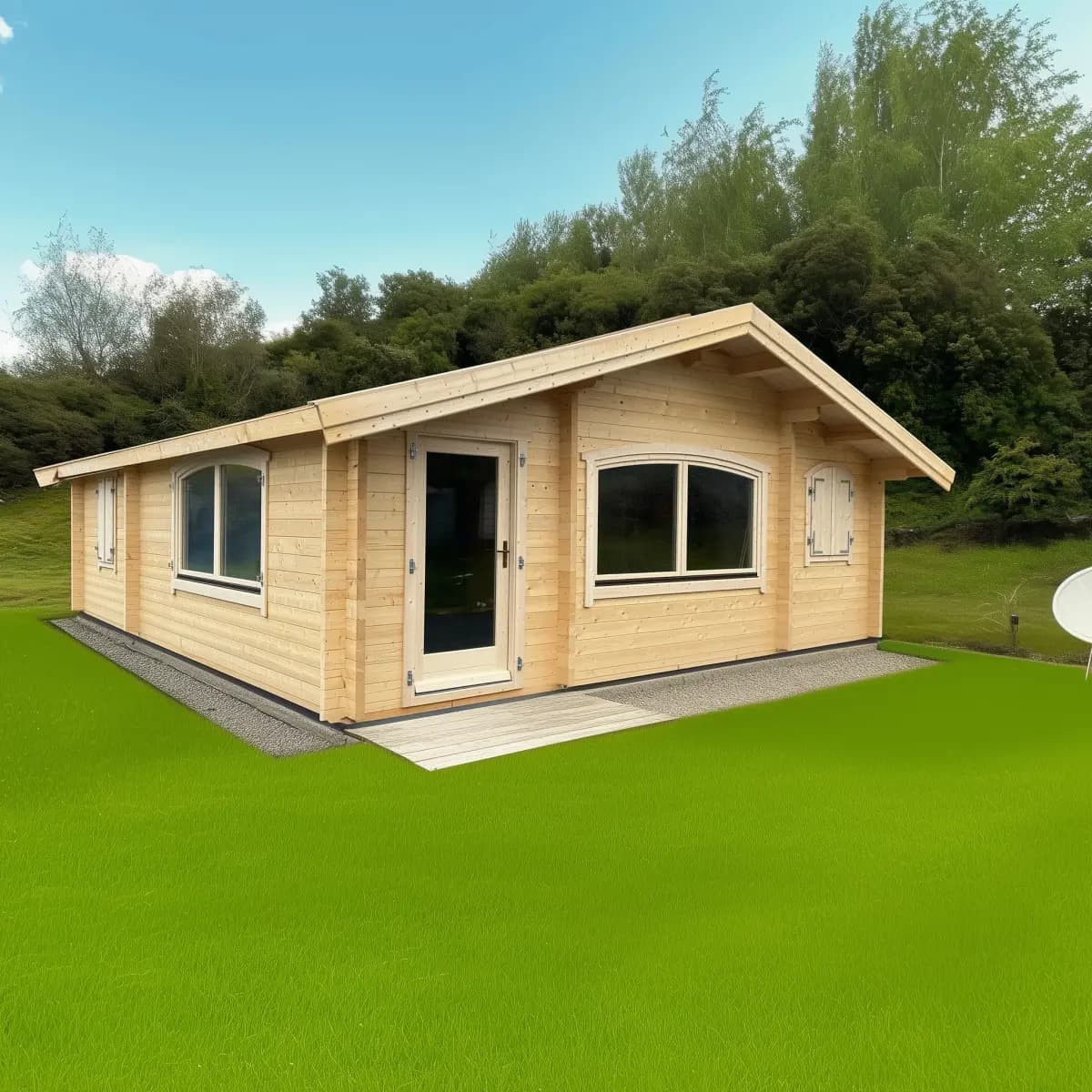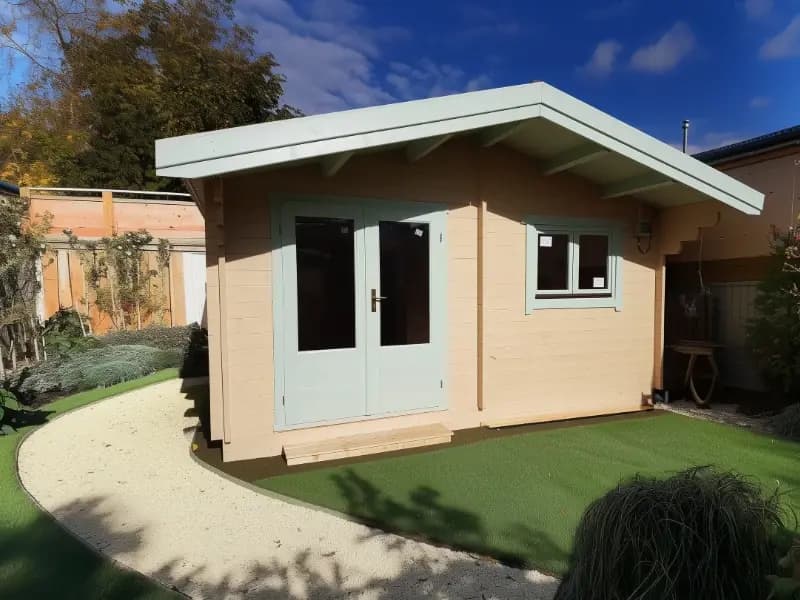
Roof, windows and floor decide how a cabin feels. The electrical installation decides what you can actually do in it — and it is the part people under-specify most often, because the cable goes in the ground before anyone thinks about a heat pump or a car charger. Late summer, with the ground dry and a trench easy to dig, is the best window in the Irish year to get it right.
How Power Actually Reaches the Cabin
In almost every Irish garden project the cabin is fed by a sub-main: a dedicated circuit taken from a spare way in the house consumer unit, run underground in SWA cable to a small distribution board inside the cabin. That board then serves sockets, lighting and any fixed heating locally. A separate ESB Networks connection is only worth considering for a granny flat that will be metered independently — it is slower and considerably more expensive, so most owners stay on the house supply.
What to Specify Before the Trench Is Dug
- Cable size, not just cable: Distance causes voltage drop. A 30 m run to a garden office is a different calculation to a 60 m run to a cabin at the end of a long site — size for the load you will have in ten years, not today.
- Depth and protection: Armoured cable, correct burial depth and marker tape. Digging the trench once is cheap; digging it twice is not.
- RCD and surge protection: Required on the cabin board, and genuinely useful in an outbuilding exposed to storm-season surges.
- Spare capacity: Two or three free ways on the cabin board covers a future EV charger, an air-to-air heat pump or an outdoor kitchen.
- Data in the same trench: Outdoor-rated ethernet laid alongside the power costs almost nothing while the ground is open.
Certification Is Not Optional
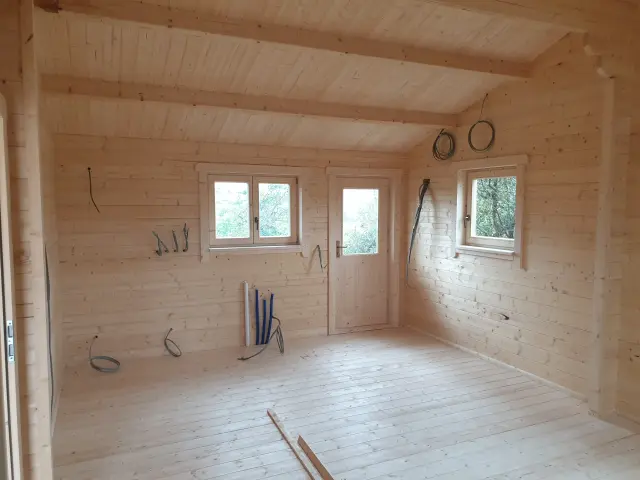
All fixed electrical work in Ireland must be carried out by a registered electrical contractor and certified under the Safe Electric scheme. Keep the completion certificate — your insurer will ask for it if you list the cabin on your home policy, and any future buyer or letting agent will too. We plan cable routes, board position and socket layout during the assembly stage so the electrician arrives to a building that is ready for first fix.
Matching the Electrics to the Use
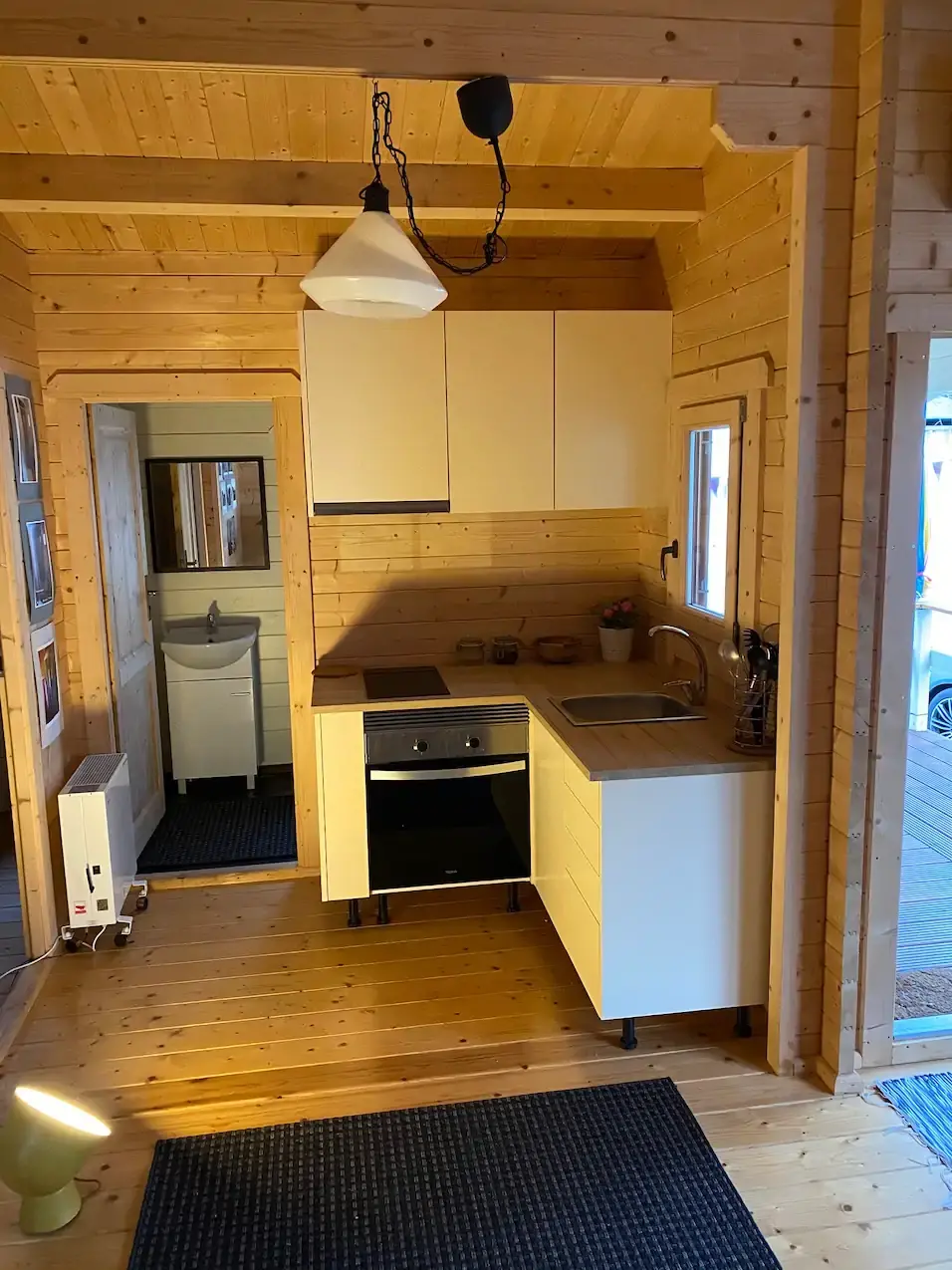
A garden office needs generous sockets and good lighting but little else. A studio cabin or granny flat used year-round needs the heating load designed in from the start, which is where the insulation specification and the electrical design meet — see our approach to keeping a cabin warm through an Irish winter.
Planning a cabin for this autumn? Send us your site layout and we will tell you what the electrical run needs to look like before anything is ordered.